

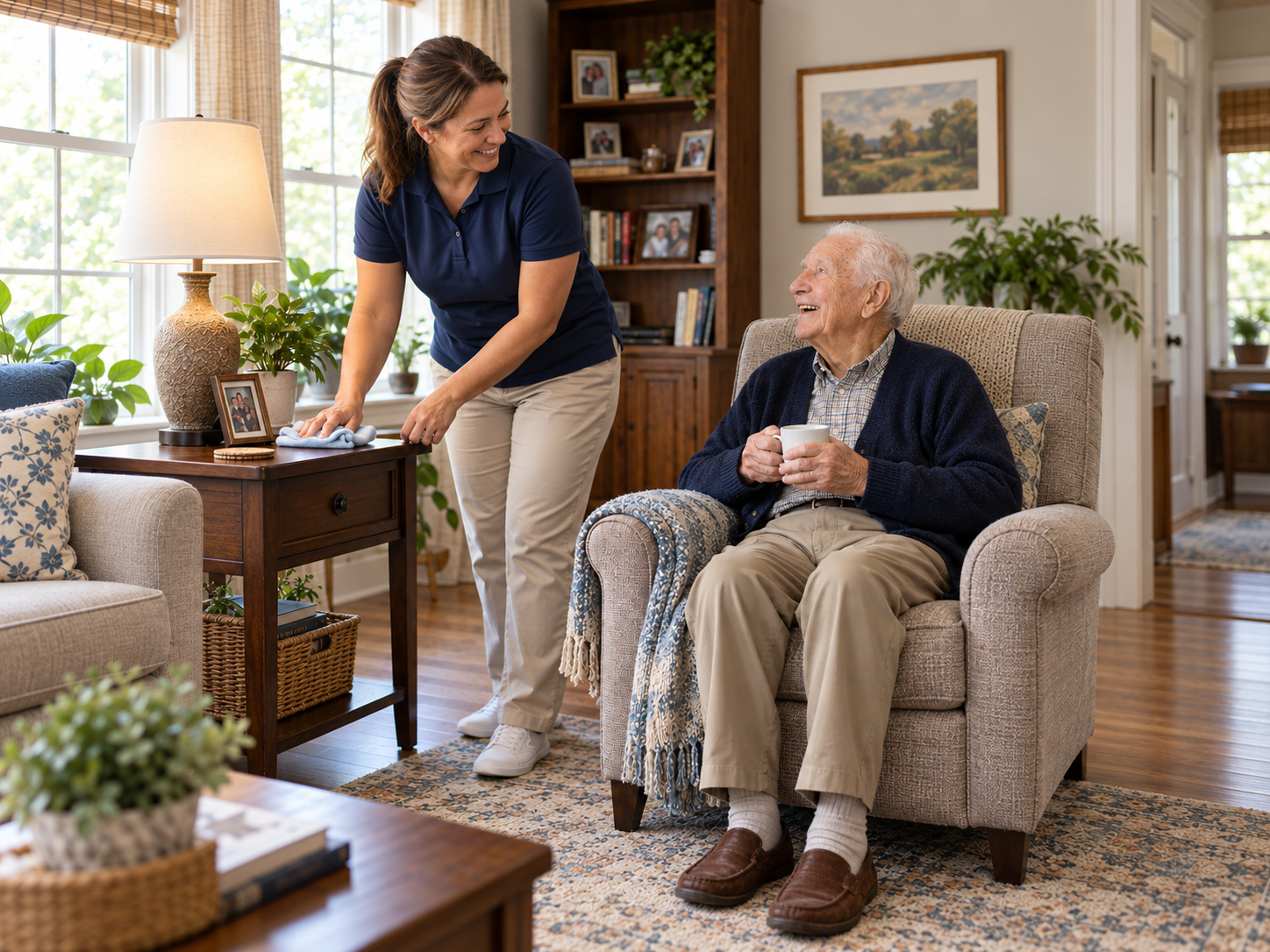
For many older adults, the desire to remain at home is strong. The challenge is that everyday household responsibilities can become harder to manage safely and consistently over time. A refrigerator may not stay stocked, laundry can pile up, or preparing a full meal may require more energy than it once did.
Homemaker services for seniors provide non-medical help with these daily routines. Depending on the care plan and provider, support may include light housekeeping, laundry, meal preparation, grocery shopping, errands, transportation, medication reminders, and companionship. The goal is not to take over a senior’s life. It is to make life at home safer, more manageable, and more comfortable while preserving as much independence as possible.
Families across the United States may hear this type of care described as homemaker care, home management assistance, senior housekeeping services, or in-home help for older adults. Although the terminology and permitted tasks can vary by state and provider, the central purpose is the same: helping an older adult maintain daily life at home.
What Are Homemaker Services for Seniors?
Homemaker services for seniors are non-medical services that help older adults manage routine household tasks and day-to-day responsibilities. They are often part of a broader home care plan and can be scheduled for a few hours at a time, on recurring days each week, or alongside other types of in-home support.
The National Institute on Aging identifies household chores, grocery shopping, laundry, meal preparation, transportation, and safety support as examples of help that can make aging at home more manageable. These practical services can fill the gap between complete independence and the need for more hands-on personal or medical care.
Homemaker care is usually provided by a trained caregiver rather than a house cleaner. While keeping the home comfortable is part of the role, the caregiver is also attentive to the senior’s routines, preferences, safety, and overall experience during the visit.
In-Home Care for Seniors & Veterans
Compassionate, personalized in home care designed to help seniors live safely and independently in the comfort of home. Our trusted home care services provide daily support, companionship, and specialized senior home care giving families peace of mind every step of the way.
What Do Homemaker Services Include?
The exact scope of homemaker services depends on the provider, state requirements, and the older adult’s care plan. Families should always confirm which tasks are available locally. Common services may include the following.
Light Housekeeping
Routine housekeeping can become tiring or unsafe when an older adult has limited mobility, reduced stamina, balance concerns, arthritis, or other age-related changes. A caregiver may help with tasks such as:
-
- Wiping counters and frequently used surfaces
- Washing dishes and loading or unloading the dishwasher
- Sweeping, vacuuming, or light mopping
- Tidying common living areas
- Changing bed linens
- Taking out household trash
- Keeping walkways clear of everyday clutter
Homemaker services usually focus on light, routine tasks that directly support the senior’s living environment. They generally do not include heavy lifting, climbing ladders, home repairs, yardwork, moving furniture, or intensive cleaning projects.
Laundry and Linen Care
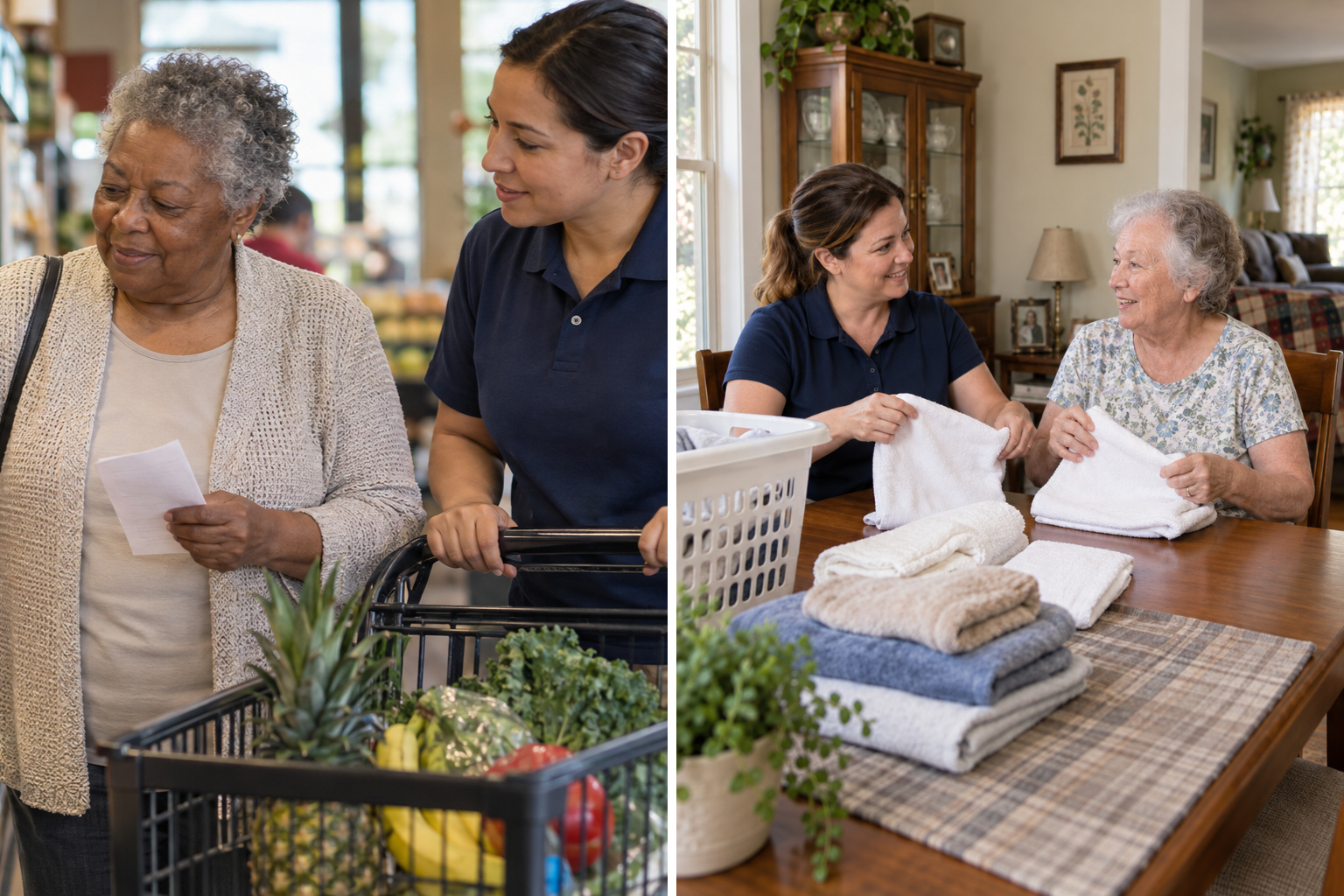
Laundry involves more than placing clothes in a machine. Carrying a basket, bending, reaching, and moving items between rooms can be difficult for someone with mobility or balance concerns. Homemaker support may include washing, drying, folding, putting away clothing, and changing sheets or towels.
This help can keep essential items available while removing a physically demanding chore from the senior’s routine.
Meal Planning and Preparation
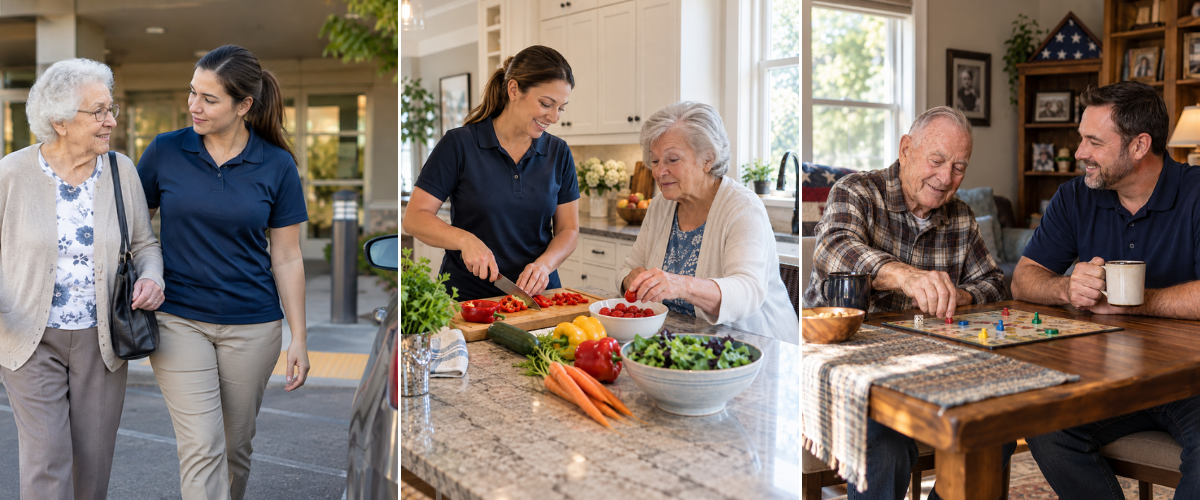
A senior may be able to live independently but struggle with planning meals, standing at the stove, opening containers, or cleaning up afterward. A caregiver can help prepare meals based on the person’s preferences, established dietary instructions, and usual routine.
Meal-related support may include:
• Reviewing available food and creating a grocery list
• Preparing simple meals and snacks
• Portioning food for later
• Cleaning the kitchen after cooking
• Offering company during mealtime
• Providing reminders to eat or drink when appropriate
Homemaker caregivers do not create medical nutrition plans. Families should share any allergies, texture needs, or dietary instructions from a qualified healthcare professional with the home care provider.
Grocery Shopping and Errands
Driving, navigating a busy store, carrying bags, and keeping track of household supplies can become challenging with age. Depending on the provider and care plan, a caregiver may accompany the senior to the store, shop from an approved list, help put groceries away, pick up prescriptions, mail packages, or complete other routine errands.
For an adult child who lives in another city or state, this practical support can provide reassurance that essential needs are being handled between family visits.
Transportation Assistance
Reliable transportation helps older adults stay connected to healthcare, family, friends, faith communities, and activities they enjoy. When offered by the provider, transportation assistance may include rides to appointments, grocery stores, social activities, or other local destinations.
Transportation policies vary. Families should ask whether the caregiver drives the senior’s vehicle or a caregiver vehicle, how mileage is handled, and whether the provider has specific geographic limits.
Medication Reminders
Non-medical caregivers may provide reminders that help a senior follow an established medication routine. For example, a caregiver may remind the person that it is time to take a medication from a prearranged system.
Medication reminders are different from medication administration. A homemaker caregiver generally does not determine dosages, change a medication schedule, give injections, or make clinical decisions. Families who need more information can read Home Halo’s guide to medication reminders for seniors.
Companionship and Everyday Engagement
Homemaker care is not limited to chores. The conversation that happens while folding laundry, preparing lunch, or going to the grocery store can be just as meaningful as the task itself. Depending on the care plan, a caregiver may share conversation, play games, take a walk, help with hobbies, read together, or provide basic technology support.
This combination is sometimes called homemaker companion care because it supports both the home and the person living in it.
What Homemaker Services Usually Do Not Include
Understanding the limits of homemaker care helps families choose the right service and avoid mismatched expectations. Homemaker services are non-medical and typically do not include:
• Skilled nursing care
• Wound care or injections
• Medication administration or dosage decisions
• Physical, occupational, or speech therapy
• Medical assessments or diagnoses
• Major home repairs or maintenance
• Heavy-duty or hazardous cleaning
• Financial, legal, or medical decision-making on the senior’s behalf
Some older adults need help with bathing, dressing, grooming, toileting, mobility, or transferring. These are personal care needs rather than household tasks. A home care provider may offer both homemaker and personal care assistance within one care plan, subject to local rules and the person’s assessed needs.
If a senior needs medical treatment or clinical monitoring at home, the family should speak with a healthcare professional about skilled home health care.
Homemaker Services Compared With Other Types of In-Home Help
Home care terms can sound similar, but the services are not interchangeable.
Homemaker Services Versus House Cleaning
A cleaning service is hired primarily to clean a home. Homemaker services are designed around the older adult’s daily well-being and routine. A caregiver may wash dishes, prepare lunch, notice that groceries are running low, and spend time talking with the senior during the same visit. The relationship and care plan are central to the service.
Homemaker Services Versus Companion Care
Companion care emphasizes social connection, supervision, and engagement. Homemaker care emphasizes household routines such as meals, laundry, and light housekeeping. In practice, the two often overlap because everyday tasks naturally provide opportunities for conversation and connection.
Homemaker Services Versus Personal Care
Personal care involves hands-on help with activities such as bathing, dressing, grooming, toileting, and mobility. Homemaker care focuses more on the home and instrumental daily tasks. Many families combine the two as a loved one’s needs change.
Homemaker Services Versus Home Health Care
Home health care is clinical care ordered or overseen by a healthcare provider and may include skilled nursing or therapy. Homemaker services are non-medical. A senior can sometimes receive both types of support at home, but they serve different purposes and may have different eligibility and payment rules.
Who Can Benefit From Homemaker Services?
Homemaker services for seniors can help a wide range of older adults and families. A person does not need to be bedridden or require constant care to benefit. In fact, beginning with a small amount of support can help address routine challenges before they become more disruptive.
Seniors Living Alone
An older adult who lives alone may be largely independent but need help with heavier parts of the weekly routine. Regular visits can provide assistance with meals, laundry, errands, and home organization while also adding dependable social contact.
Older Adults With Mobility or Stamina Changes
Arthritis, balance concerns, shortness of breath, or reduced endurance can make cooking, carrying groceries, or changing sheets difficult. Homemaker care allows the senior to conserve energy for the activities that matter most to them.
Seniors Returning Home After a Hospital or Rehabilitation Stay
A transition home can involve new routines and temporary limitations. Non-medical homemaker help can support meal preparation, laundry, errands, and a more manageable household while the person recovers. Clinical needs should remain under the direction of the appropriate healthcare professionals.
People Living With Memory Changes
Consistent routines can be valuable for someone living with dementia or other memory changes. A caregiver may help keep the day organized, prepare familiar meals, provide reminders, and reduce household confusion. Homemaker assistance may be combined with specialized dementia support when appropriate.
Spouses and Family Caregivers
Family caregivers often manage meals, shopping, housekeeping, transportation, and appointments in addition to their own work and family responsibilities. Homemaker support can take recurring tasks off their list and create time to rest, work, or simply be present as a spouse, child, or friend.
Families who need temporary relief may also consider in-home respite care.
Long-Distance Family Members
When adult children live far away, it can be difficult to know whether a parent’s refrigerator is stocked, laundry is done, or everyday routines are becoming harder. A consistent home care schedule can provide practical local support and a clearer line of communication, based on the senior’s consent and the provider’s policies.
Veterans Who Qualify for Support
Eligible Veterans may be able to receive help through the VA’s Homemaker and Home Health Aide program when there is a clinical need. The VA explains that services are based on assessed needs, may support daily activities, and can also help Veterans remain at home or provide respite for family caregivers. Availability can vary by location, and a VA social worker can help determine eligibility and arrange services. Learn more from the U.S. Department of Veterans Affairs.
Signs It May Be Time to Consider Homemaker Care
The need for support often appears through small changes rather than one major event. Families may want to explore homemaker services when they notice:
• Unopened or expired food in the refrigerator
• Frequent skipped meals or reliance on snacks
• Laundry or dishes accumulating
• Increasing clutter in walking areas
• Difficulty carrying groceries or household items
• Missed errands or trouble getting to appointments
• Fatigue after completing basic chores
• Less interest in cooking or maintaining the home
• A family caregiver becoming overwhelmed
• A senior withdrawing because transportation or daily tasks feel difficult
One sign alone does not necessarily mean a person needs ongoing care. Look for patterns, changes from the person’s normal routine, and the effect those changes have on safety, nutrition, comfort, and family stress.
Trusted Home Care Services
At The Home Halo®, we are a trusted home care agency dedicated to providing non medical home care, companion care, and caregiver services that support independence, dignity, and comfort at home.
How Homemaker Services Support Independence at Home
Accepting help can feel uncomfortable for an older adult who values independence. A strong care plan should support choice rather than remove it. The senior can remain involved in deciding what meals to prepare, which errands matter, how the home is organized, and what assistance feels useful.
Homemaker services can support independence by:
• Keeping essential routines consistent
• Reducing the physical strain of household tasks
• Making meals and household supplies more accessible
• Helping the senior stay connected to the community
• Providing companionship during ordinary parts of the day
• Giving family caregivers dependable time away from responsibilities
• Adjusting support as needs and preferences change
The best care does not simply complete a list of chores. It helps the senior continue living in a way that feels familiar, respectful, and personal.
How Often Can a Homemaker Visit?
Schedules vary based on need, provider availability, local requirements, and any minimum visit length. Some seniors benefit from one or two visits each week for laundry, groceries, and meal preparation. Others may need daily support or homemaker assistance combined with personal care, companionship, overnight care, or respite care.
A useful schedule is built around real routines. Families should consider when meals are most difficult, which chores create the greatest safety concerns, when transportation is needed, and where the family caregiver needs relief. The plan can then be reviewed as circumstances change.
How Much Do Homemaker Services for Seniors Cost?
The cost of homemaker services for seniors varies across the country. Rates may depend on the local market, number of hours scheduled, frequency of visits, time of day, weekend or holiday needs, transportation, and the type of support included.
Families may pay privately or use a combination of resources. Long-term care insurance may cover qualifying services depending on the policy. Certain Medicaid home and community-based programs may provide support for eligible individuals, but benefits and enrollment processes vary by state. Local aging organizations may also know about community-based programs.
Original Medicare generally does not pay for homemaker services such as shopping and cleaning when those tasks are unrelated to a Medicare-covered home health care plan. Medicare also does not cover custodial or personal care when it is the only care a person needs. Families should review the current Medicare home health coverage information and contact their plan directly with benefit questions.
Veterans and their families can ask a VA social worker about eligibility for VA-supported services. For help finding other programs nearby, the federal Eldercare Locator connects older adults and families with local resources throughout the United States.
Before care begins, ask the provider for a written explanation of rates, minimum hours, schedule requirements, holiday pricing, transportation charges, and cancellation policies.
How to Choose a Homemaker Services Provider
Because requirements differ across states, families should evaluate both the agency and the specific care plan. Use these checkpoints during your search:
-
- Confirm that the provider is appropriately licensed or registered for this service in your state.
- Ask whether caregivers are employees or independent contractors.
- Review how caregivers are screened, trained, and supervised.
- Clarify which homemaker tasks are included and excluded.
- Determine whether homemaker support can be combined with personal care or respite care.
- Discuss how the provider will match a caregiver with your loved one.
- Identify whom the family should contact about a schedule change or concern.
- Understand how the provider communicates updates while protecting the senior’s privacy.
- Verify whether backup care is available if the regular caregiver cannot visit.
- Find out how often the care plan is reviewed.
Homemaker Services Across the United States
Homemaker services are available in many communities nationwide, but the name, scope, caregiver qualifications, agency requirements, and payment options can differ by state. A service called homemaker care in one area may be described as home management assistance, companion care, or personal assistance elsewhere.
That is why national guidance should be paired with local information. Families should confirm which tasks are allowed, which services a specific provider offers, and whether any public or insurance benefits apply where the senior lives.
Home Halo provides personalized, non-medical home care for seniors and Veterans in growing communities across the country. Visit our locations page to find a Home Halo office serving your area.
Trusted Home Care Services for Seniors & Families
Finding the right home care services for seniors and elderly loved ones can be overwhelming. We make it simple by connecting families with compassionate and reliable in-home care solutions tailored to individual needs.
Frequently Asked Questions About Homemaker Services for Seniors
What is the main purpose of homemaker services?
The main purpose of homemaker services is to help an older adult manage household routines and remain comfortable at home. Support may include light housekeeping, laundry, meal preparation, shopping, errands, transportation, reminders, and companionship, depending on the provider and care plan.
Are homemaker services only for seniors who live alone?
No. Homemaker services can help seniors who live alone, with a spouse, with adult children, or in another private home setting. They can also support a spouse or family member who is already providing care.
Is a homemaker caregiver the same as a house cleaner?
No. A house cleaner focuses on cleaning tasks. A homemaker caregiver supports the senior’s broader daily routine and may combine light housekeeping with meals, errands, reminders, transportation, and companionship. The exact scope varies by provider.
Can homemaker services include bathing or dressing?
Bathing, dressing, grooming, toileting, and hands-on mobility support are generally considered personal care. An agency that provides both homemaker and personal care services may combine them in one individualized plan when permitted locally.
Does Medicare pay for homemaker services for seniors?
Original Medicare generally does not cover shopping or cleaning that is unrelated to a covered home health care plan. Coverage rules differ for other programs and plans, so families should verify benefits directly with Medicare, a Medicare Advantage plan, Medicaid, the VA, or a long-term care insurance provider as applicable.
How many hours of homemaker care does a senior need?
There is no single schedule that fits every family. A senior may need a few hours each week for meals, laundry, and errands, while another may need daily assistance combined with other home care services. An assessment can help identify the routines that need support and build a practical schedule.
Can homemaker care change as a senior’s needs change?
Yes. A flexible care plan can begin with household support and later add more frequent visits, personal care, respite care, or other services when needs change. Families should ask how often the provider reviews and updates care plans.
Find Homemaker Services for a Loved One
The right amount of help can make everyday life feel more manageable without taking away a senior’s independence. Homemaker services for seniors provide practical support with the routines that keep a household running while offering families added reassurance and connection.
Home Halo’s home management assistance is personalized around each senior’s needs, preferences, and daily routine. Whether your family is looking for help with meals, laundry, errands, transportation, companionship, or a combination of non-medical home care services, our team can help you explore the next step.
Find a Home Halo location near you to request a consultation and learn which services are available in your area.