

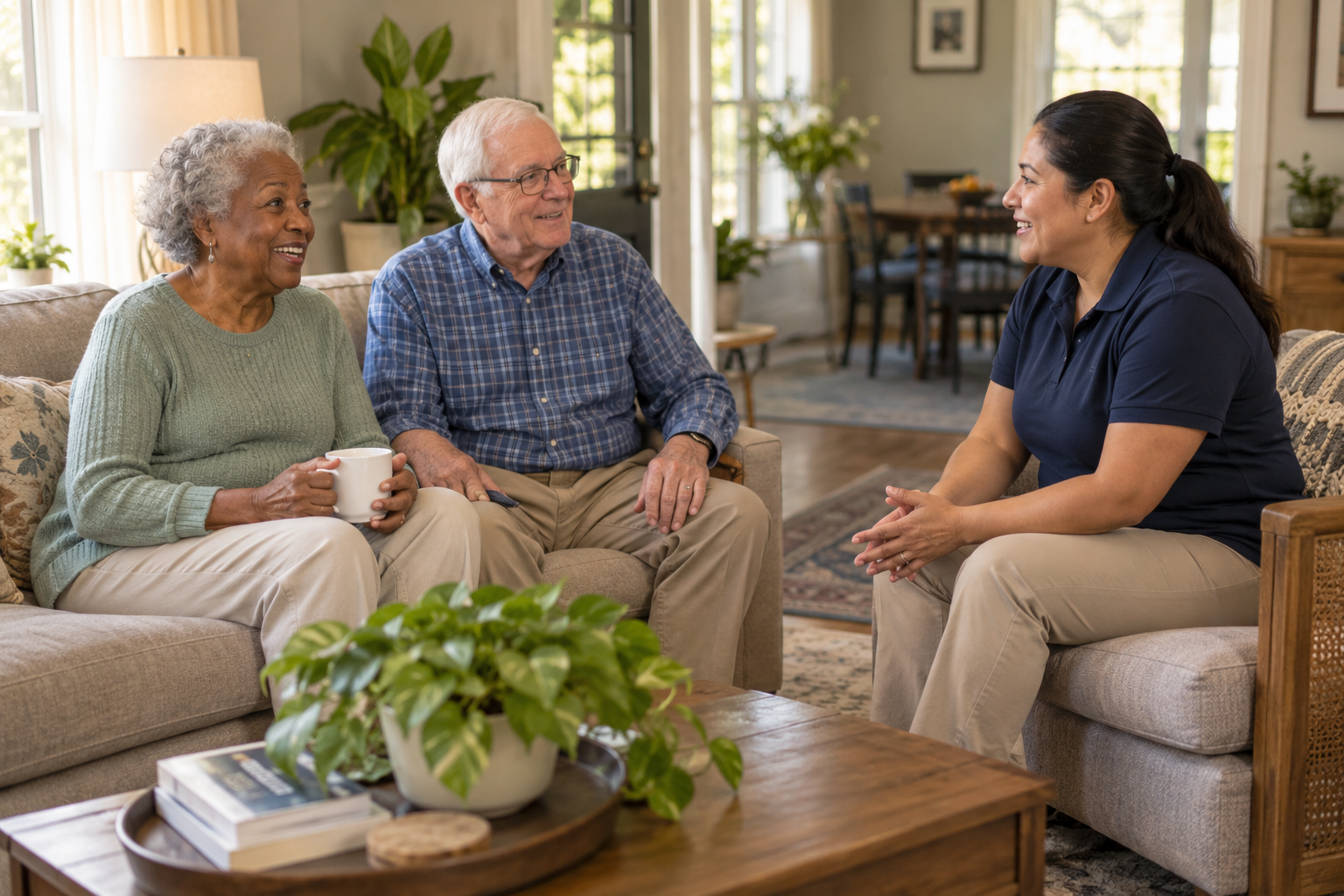
Many older adults want to remain in the homes they know, surrounded by familiar routines, neighbors, and memories. This choice is often called aging in place. It can offer comfort and control, but it requires thoughtful planning.
Aging in place does not mean an older adult must manage everything alone. It means creating the right combination of home safety, health support, transportation, social connection, technology, family involvement, and professional care so the person can continue living at home as safely and independently as possible.
The best time to begin is before a crisis. Planning now makes it easier to adapt if mobility, health, memory, or daily routines change later.
|
Quick Answer: What Is Aging in Place? Aging in place means continuing to live in one’s own home and community as needs change with age. A successful plan may include home modifications, preventive healthcare, help with personal care or household tasks, reliable transportation, emergency planning, social support, and in-home services. The goal is not complete self-sufficiency. The goal is to preserve choice, dignity, safety, and quality of life with the appropriate level of support. |
Why Do Many Older Adults Want to Age in Place?
Home may hold decades of memories, established routines, nearby friends, and a strong connection to the community. Remaining there can help an older adult maintain familiarity and identity.
Aging in place may also allow someone to:
- Keep more control over daily schedules and preferences
- Remain close to neighbors, family, faith communities, and local activities
- Continue meaningful hobbies and routines
- Adjust support as needs change
Staying home is not automatically the safest or most affordable choice for everyone. Families should consider the home, the person’s abilities, available support, and cost. A realistic plan protects independence by preparing for change.
In-Home Care for Seniors & Veterans
Compassionate, personalized in home care designed to help seniors live safely and independently in the comfort of home. Our trusted home care services provide daily support, companionship, and specialized senior home care giving families peace of mind every step of the way.
Planning Ahead Makes Aging in Place More Sustainable
Families often discuss care after a fall, hospitalization, driving concern, or change in memory. Planning earlier gives the older adult more time to express preferences and participate in decisions.
The National Institute on Aging recommends considering current and future needs, learning about home-based services, discussing health conditions with medical providers, and revisiting the plan as circumstances change.
Start the conversation with practical questions:
- Which daily activities are easy now, and which are becoming tiring or difficult?
- Is the home safe to enter, move through, and use at night?
- What would happen if the person could no longer drive?
- Who could help with meals, errands, personal care, or appointments?
- Is there a plan for a fall, severe weather event, power outage, or medical emergency?
- What care and home-modification costs could the household reasonably manage?
- Which parts of the person’s routine and identity matter most to preserve?
These questions help families build a plan around what matters most to the older adult.
1. Make the Home Safer and Easier to Navigate
A home may become harder to use when vision, strength, balance, or mobility changes. Begin with a room-by-room review and address immediate hazards first.
Useful improvements may include:
- Removing loose rugs, clutter, electrical cords, and low furniture from walkways
- Improving lighting in hallways, entrances, bathrooms, and stairways
- Adding secure handrails on both sides of stairs when appropriate
- Installing grab bars near the toilet and inside the tub or shower
- Using nonslip surfaces in areas that may become wet
- Repairing uneven flooring, steps, or railings
- Keeping frequently used items within comfortable reach
- Creating clear paths for a cane, walker, or wheelchair
- Considering a ramp, lever-style door handles, or a zero-step entrance if needed
An occupational therapist, physical therapist, aging-in-place specialist, or other qualified professional can recommend modifications based on the person’s abilities and routines.
Falls can affect an older adult’s health, confidence, and ability to remain independent. The Centers for Disease Control and Prevention emphasizes that falls are not an inevitable part of aging and that many risk factors can be addressed. For a more detailed room-by-room review, read Home Halo’s guide to fall prevention for seniors.

2. Support Health, Strength, and Mobility
A safe home is only one part of the plan. Regular healthcare and attention to movement, vision, hearing, and balance also matter.
Older adults should tell their healthcare providers about dizziness, weakness, pain, shortness of breath, walking changes, or recent falls. A physician or pharmacist can review medications for effects that may influence alertness or balance. Vision, hearing, dental care, and foot health also affect daily functioning.
Physical activity can help maintain strength, balance, flexibility, and endurance. A healthcare or rehabilitation professional can recommend appropriate activity, especially after illness, injury, surgery, or inactivity.
Safe, approved movement can support both physical function and confidence.
3. Pay Attention to Activities of Daily Living
Activities of daily living, or ADLs, are personal tasks such as bathing, dressing, grooming, toileting, eating, walking, and transfers. Instrumental activities of daily living, or IADLs, include cooking, shopping, transportation, laundry, housekeeping, appointments, and bills.
Difficulty with one task does not automatically mean someone can no longer live at home. It may simply mean the person needs a safer method, an adaptive device, or help at a particular time of day.
Someone may manage most of the day independently but need help with showering, meals, or evening routines. Another person may be physically capable but need prompts because of memory changes.
Home Halo’s daily living support can provide respectful non-medical assistance with personal routines. Home management assistance can help with tasks such as light housekeeping, laundry, meal preparation, grocery shopping, errands, transportation, and companionship, depending on the care plan and local availability.
4. Create Simple Systems for Meals and Medications
Nutrition can suffer when shopping, cooking, opening containers, or remembering meals becomes difficult. Watch for an empty refrigerator, expired food, skipped meals, weight changes, or reduced interest in cooking.
Helpful strategies may include:
- Keeping easy-to-prepare foods available
- Freezing meals in manageable portions
- Arranging grocery delivery or shopping help
- Following dietary guidance from the person’s healthcare team
- Making water and other appropriate drinks easy to reach
- Sharing meals with family, friends, or a caregiver
Keep an updated medication list and bring it to appointments. Ask a physician or pharmacist about side effects, refills, or confusing instructions. Pill organizers, pharmacy packaging, alarms, and written schedules may help when appropriate.
Non-medical caregivers can provide medication reminders according to the care plan, but they do not prescribe or change medications. Families should confirm the services permitted by the provider and applicable state rules.
Trusted Home Care Services
At The Home Halo®, we are a trusted home care agency dedicated to providing non medical home care, companion care, and caregiver services that support independence, dignity, and comfort at home.
5. Plan for Transportation Before Driving Becomes a Crisis
Transportation helps older adults reach appointments, buy groceries, see friends, attend services, and participate in community life.
Plan before driving is reduced or stopped. Options may include family, public transit, senior transportation, paratransit, volunteer drivers, ride services, and caregiver transportation.
List recurring destinations and identify a primary and backup way to reach each one.
6. Protect Social Connection and Emotional Well-Being
Living at home can become isolating if an older adult no longer drives, has lost loved ones, or struggles to leave the house. Social connection belongs in the care plan.
Look for opportunities that fit the person’s interests and energy level:
- Schedule regular calls and visits with family or friends
- Continue involvement in faith or community groups
- Attend senior programs, classes, or shared meals
- Arrange transportation to favorite activities
- Use simple technology for video calls when helpful
- Continue gardening, music, crafts, or other familiar activities
- Consider companion care for conversation, shared activities, and outings
The National Institute on Aging notes that social isolation and loneliness can affect physical and mental health. Meaningful contact helps preserve connection and purpose.

7. Use Technology as One Part of the Safety Plan
Technology can add support, but it should match the person’s comfort level and never replace needed human care.
Options may include:
- A medical alert device
- Automatic or motion-activated lighting
- Doorbell cameras or entry alerts used with the older adult’s knowledge and consent
- Medication reminders
- Simplified phones or voice assistants
- Smart thermostats
- Calendar and appointment alerts
- Video calling or other communication tools
Choose tools the older adult understands and will use. Test them, keep contacts current, and plan for outages. The best option fits the person’s routine and solves a real problem.
8. Build an Emergency and Communication Plan
Keep emergency numbers, medical contacts, medications, allergies, and health details in an easy-to-find place. Trusted family members should know where essential documents are stored.
The plan should address:
- What to do after a fall or sudden illness
- How to call for help from the bedroom, bathroom, and outdoor areas
- Who will check in if calls go unanswered
- Where the person could stay during an evacuation
- How essential medications and mobility devices would be transported
- What to do during an extended power outage or severe weather event
- Who can access the home in an emergency
Review the plan yearly and after a hospitalization, diagnosis, fall, move, medication change, or change in ability.
9. Share Responsibility With Family and Community Resources
Divide responsibilities clearly. One person might coordinate appointments, another may handle groceries, and someone nearby may provide check-ins.
Write down each responsibility and its backup so gaps are easier to spot.
Community organizations can also help. The federal Eldercare Locator, a public service of the Administration for Community Living, connects older adults and families with local resources. These may include Area Agencies on Aging, transportation, meal programs, caregiver support, legal assistance, housing resources, and other community services. Availability and eligibility vary by location.
Trusted Home Care Services for Seniors & Families
Finding the right home care services for seniors and elderly loved ones can be overwhelming. We make it simple by connecting families with compassionate and reliable in-home care solutions tailored to individual needs.
10. Plan for the Cost of Aging in Place
A budget may include home modifications, transportation, meals, alert systems, housekeeping, and in-home care. Some costs are occasional and others are ongoing.
Payment sources may include personal funds, long-term care insurance, Medicaid for eligible individuals, qualifying veterans benefits, and local programs. Families should verify eligibility and coverage.
Do not assume Medicare will pay for ongoing non-medical care. Medicare explains that it generally does not cover long-term custodial care, including most ongoing help with activities of daily living. Medicare may cover certain medically necessary, time-limited home health services when its requirements are met, but that is different from ongoing non-medical home care.
Ask for written estimates and understand minimum visit requirements. A financial planner, elder law attorney, benefits counselor, or Area Agency on Aging may help.
Signs an Older Adult May Need More Support at Home
Families may notice small changes before an older adult asks for help.
Possible signs include:
- Recent falls, near-falls, or new bruises
- Difficulty bathing, dressing, toileting, or moving safely
- Missed meals, spoiled food, or noticeable weight loss
- Confusion about medications or frequent missed doses
- Unopened mail, unpaid bills, or unusual financial mistakes
- A home that is becoming cluttered or difficult to maintain
- Missed appointments or getting lost on familiar routes
- Withdrawal from friends, hobbies, or community activities
- Increased anxiety, loneliness, or fear of being alone
- Family caregivers feeling exhausted or unable to cover all needed hours
One sign may have a simple explanation, but a pattern deserves a closer look. Involve the older adult in deciding what support would help. Sudden confusion, weakness, severe pain, difficulty breathing, or another abrupt health change requires prompt medical attention.
How Non-Medical Home Care Can Support Aging in Place
Non-medical home care can support the space between complete independence and residential care. Hours can change as needs evolve.
Depending on the care plan, a caregiver may help with:
- Bathing, dressing, grooming, and toileting
- Walking, transfers, and safe movement during daily routines
- Meal preparation and hydration reminders
- Medication reminders
- Light housekeeping and laundry
- Grocery shopping and errands
- Transportation and accompaniment to appointments or activities
- Companionship and meaningful engagement
- Respite for family caregivers
- Observation and communication about changes noticed during visits
Support should strengthen independence, not take over tasks the person can do safely. A strong plan respects routines, preferences, culture, privacy, and changing abilities.
Home Halo provides relationship-driven, non-medical care for older adults, veterans, and families. Care can be scheduled around morning routines, meals, transportation, companionship, or more consistent needs. Families can also explore in-home respite care when they need time to rest, work, travel, or manage other responsibilities.
A Simple Aging-in-Place Planning Checklist
Use these steps to begin a practical conversation:
- Ask the older adult what staying independent means to them.
- Review the home for immediate safety and accessibility concerns.
- List current health, mobility, personal care, household, and transportation needs.
- Identify who can reliably help and where paid support may be needed.
- Create an emergency plan and share it with trusted people.
- Research local resources and expected costs.
- Start with the least intrusive support that adequately addresses the need.
- Set a date to review the plan and adjust it as circumstances change.
Aging in place is an ongoing process. Revisit the plan after health events, caregiver schedule changes, or shifts in mobility or memory.
When Might Aging in Place No Longer Be the Safest Option?
For some people, needs may eventually exceed what can be provided safely or sustainably at home.
It may be time to reconsider the plan when there are repeated emergencies, unsafe wandering, serious fire or cooking risks, frequent falls despite interventions, unmet medical needs, around-the-clock needs that cannot be staffed reliably, or caregiver strain that cannot be resolved with added support.
This does not mean the plan failed. Families can work with the older adult, healthcare providers, and care professionals to compare settings and support safety, dignity, and quality of life.
Frequently Asked Questions About Aging in Place
What is the meaning of aging in place?
Aging in place means remaining in one’s home and community while adapting the environment and support plan as needs change.
What are the most important parts of an aging-in-place plan?
Key parts include home safety, healthcare, help with daily activities, meals, transportation, social connection, emergency planning, and a realistic budget.
Can someone age in place if they live alone?
Yes. Regular check-ins, transportation, emergency alerts, community resources, home modifications, and in-home care may help. Reassess the plan as health, mobility, or memory changes.
How can families discuss aging in place without taking away independence?
Begin with the older adult’s goals. Ask what matters, what feels difficult, and what help feels acceptable. Offer choices and involve the person whenever possible.
What is the difference between home care and home health care?
Home care provides non-medical help with personal care, meals, housekeeping, transportation, and companionship. Home health care is clinical care provided by licensed professionals, often for a specific medical need. Some people use both.
Does Medicare pay for aging-in-place services?
Medicare may cover certain eligible medical services, but generally not ongoing custodial or non-medical long-term care. Review current rules and other possible benefits directly.
When should a family consider in-home care?
Consider it when routines are becoming difficult, family cannot consistently meet every need, isolation is increasing, or a small amount of help could prevent a larger disruption.
Helping Older Adults Remain at Home With Confidence
Aging in place works best when safety and independence are treated as partners. The right plan reduces avoidable risks while preserving familiar routines, relationships, and choices.
Begin with the person’s goals, address urgent concerns, and add support as needs change. Small steps can make home life more manageable.
Home Halo offers personalized non-medical home care designed to help older adults and veterans remain safe, comfortable, and connected at home. To discuss your family’s needs, find a Home Halo location near you and request a personalized consultation.