


24-hour home care in Boston can give an older adult consistent non-medical support throughout the day and night while allowing them to remain in familiar surroundings. Families often begin exploring this option after a fall, a hospital stay, worsening memory changes, repeated nighttime needs, or growing concern that a parent or spouse is no longer safe alone.
A loved one needing help at 2 a.m. is a different situation from someone who only needs assistance with breakfast or errands. The goal of continuous care is to build a dependable plan across the full 24-hour period, including mornings, evenings, overnight routines, and caregiver shift changes.
|
Quick answer: 24-hour home care is continuous in-home support arranged across the day and night. It is commonly staffed by multiple caregivers working scheduled shifts. Families should ask whether overnight care is awake or sleeping, how handoffs are managed, and what backup coverage is available if a caregiver cannot report to work. |
What Is 24-Hour Home Care in Boston?
Twenty-four-hour home care is a schedule designed to prevent gaps in non-medical support. A caregiver is present in the home during each part of the day according to the care plan. Depending on the senior’s needs, that support may include hands-on personal care, mobility assistance, meals, household routines, companionship, reminders, supervision, and help during the night.
It is different from skilled home health care. Home Halo provides non-medical support, not nursing, therapy, wound care, medical assessment, or emergency services. Some older adults use non-medical care alongside a visiting nurse, physical therapist, hospice team, or another clinical provider. Families who are still comparing basic services can begin with Home Halo’s broader guide to home care for seniors in Boston.
The phrase 24-hour care does not automatically describe one specific staffing model. Agencies may use terms such as 24/7 home care, around-the-clock care, overnight care, or live-in care differently. The schedule matters more than the label.
In-Home Care for Seniors & Veterans
Compassionate, personalized in home care designed to help seniors live safely and independently in the comfort of home. Our trusted home care services provide daily support, companionship, and specialized senior home care giving families peace of mind every step of the way.
How 24-Hour Home Care Is Usually Scheduled
Rotating caregiver shifts
Many continuous-care plans use two or more caregivers across a 24-hour period. Each caregiver works a defined shift, completes the tasks assigned for that time, and shares relevant information during the handoff. This structure allows the person on duty to remain attentive and gives the family a clear point of contact at every hour.
Awake overnight care versus sleeping overnight care
If a senior needs frequent toileting help, redirection, repositioning, mobility support, or supervision during the night, the plan may require an awake overnight caregiver. A sleeping overnight arrangement assumes the caregiver can rest and only provide limited help when needed. Families should describe the real nighttime pattern honestly. Repeated interruptions can make a sleeping arrangement inappropriate even if the senior occasionally sleeps through the night.
24-hour care versus live-in care
With live-in care, a caregiver generally stays in the home for an extended period and must have protected sleep, meal, and rest time under the applicable arrangement. Continuous shift care is structured to keep a working caregiver available without relying on one person to remain alert for an entire day. Availability, terminology, and scheduling requirements vary, so ask the provider to put the proposed coverage in writing.
For a national overview of staffing and care models, read 24-Hour Home Care for Seniors: How It Works and When Families Consider It.
When Boston Families May Consider Around-the-Clock Support
More care is not automatically better. The right schedule should reflect the person’s actual risks, abilities, preferences, and medical guidance. Still, families may want to discuss 24-hour home care in Boston when several of the following concerns are present:
- The senior has fallen, wandered, or become disoriented when alone.
- Personal care, toileting, transfers, or mobility assistance is needed at unpredictable times.
- Nighttime wakefulness or confusion creates a safety concern for the senior or an exhausted family caregiver.
- A hospital or rehabilitation discharge plan requires more day-to-day support than relatives can safely provide.
- Memory changes make it difficult to follow routines, prepare food, recognize hazards, or call for help.
- A spouse or adult child is providing nearly constant care and can no longer sleep, work, or manage other responsibilities.
- The senior strongly wants to remain at home, and a realistic care plan can support that preference.
- Short-term continuous support is needed while the family arranges a longer-term plan.
A pattern matters more than one difficult day. If your family is trying to organize the bigger picture, Home Halo’s practical guide to caring for elderly parents at home can help you assess safety, divide responsibilities, and prepare for a care conversation.
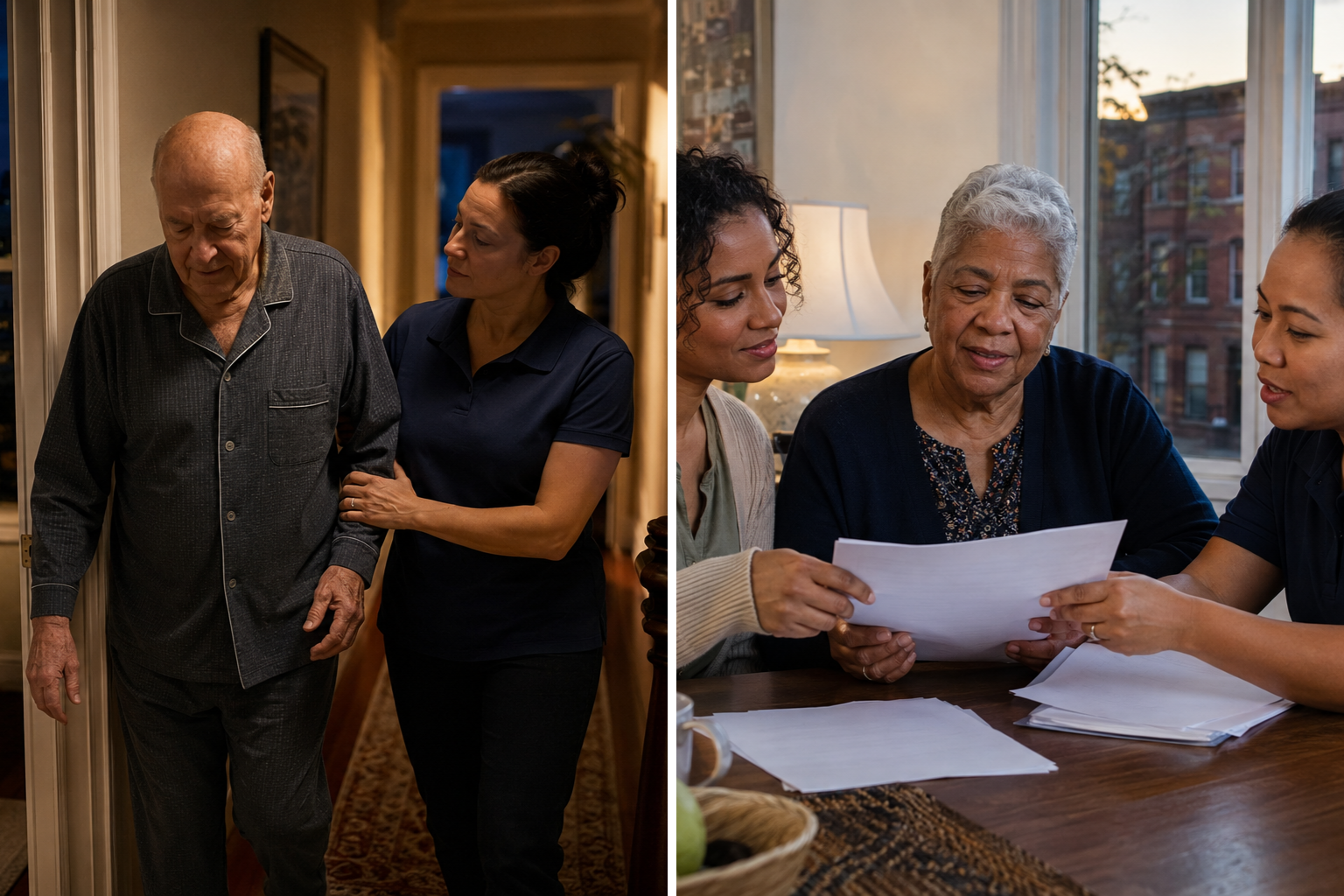
What Can a 24-Hour Caregiver Help With?
The care plan should be specific enough that each caregiver understands what the senior needs and how they prefer to receive help. Non-medical 24-hour support may include:
- Bathing, dressing, grooming, toileting, and other personal routines
- Walking, transfers, repositioning, and mobility support within the caregiver’s role
- Meal planning, meal preparation, hydration reminders, and help with eating
- Medication reminders based on the established schedule
- Companionship, conversation, hobbies, and meaningful daily activities
- Light housekeeping, laundry, changing linens, and keeping common areas organized
- Transportation or accompaniment to appointments and errands when included in the plan
- Safety awareness, calm redirection, and routine support for a person living with memory loss
- Updates to approved family contacts and communication at caregiver shift changes
Home Halo’s daily living support and home management assistance pages explain many of the everyday tasks that may be included in a personalized non-medical care plan.
A non-medical caregiver does not replace a physician, nurse, therapist, or emergency responder. Before care begins, ask what tasks the provider permits, what requires a licensed clinician, and how caregivers are instructed to respond to a medical change or emergency.
Why Boston Homes Require Local Planning
A strong care plan reflects the home and neighborhood, not just a list of tasks. Boston’s housing, traffic, weather, and healthcare landscape can affect how continuous care is staffed and delivered.
Home layout and caregiver access
Brownstones, triple-deckers, older multifamily homes, and compact apartments may have steep stairs, narrow bathrooms, limited storage, or no elevator. Families should identify safe entrances, parking or transit options, building rules, keys, intercom instructions, and where a changing caregiver can arrive without disturbing the senior. A home-safety review may also reveal a need for better lighting, clear walking paths, grab bars, or professional recommendations about mobility equipment.
Hospital-to-home transitions
Families often begin looking for extended care after a discharge from Massachusetts General Hospital, Brigham and Women’s Hospital, Beth Israel Deaconess Medical Center, Boston Medical Center, Tufts Medical Center, or another local hospital. Non-medical caregivers can help with meals, personal routines, mobility, transportation, and household tasks, but they must follow the discharge plan and cannot replace skilled nursing or therapy. Start planning as early as possible because a same-day request may be difficult to staff continuously.
Transportation and community routines
Continuous care should not mean a senior becomes disconnected from Boston. Depending on the care plan, a caregiver may help the person prepare for appointments, accompany them on errands, take a short neighborhood walk, or stay connected to a library, faith community, senior program, or favorite local routine. Travel time, traffic, mobility, parking, and winter conditions should be built into the schedule.
Weather and backup coverage
Snow, ice, storms, and transit disruptions can affect caregiver travel. Ask how the agency plans for call-outs and severe weather, who coordinates replacement coverage, and when the family would be contacted. A written contingency plan is especially important when the senior cannot safely remain alone.
Trusted Home Care Services
At The Home Halo®, we are a trusted home care agency dedicated to providing non medical home care, companion care, and caregiver services that support independence, dignity, and comfort at home.
24-Hour Home Care for Dementia and Memory Loss
Dementia-related needs often change across the day. A person may manage well in the morning but become anxious, restless, or disoriented later. Others wake frequently, attempt to leave the home, forget to use a mobility device, or need help with personal care they no longer recognize.
Continuous support may provide a steadier routine, familiar approaches to communication, help with meals and hydration, supervision, calm redirection, and relief for relatives who have been covering every night. Caregivers should learn the person’s history, preferences, triggers, comforting activities, and usual ways of communicating, not only the diagnosis.
Families can learn more in Home Halo’s guide to dementia care at home in Massachusetts and on the dementia home care services page. Sudden confusion, new agitation, weakness, pain, or another abrupt change should be discussed promptly with an appropriate healthcare professional because it may have a medical cause.
How Much Does 24-Hour Home Care in Boston Cost?
Continuous care is usually one of the most expensive home care schedules because it requires staffing every hour of the day. A meaningful estimate must be based on the actual plan rather than a single advertised hourly rate.
Cost may be affected by the number and length of shifts, awake overnight needs, the level of personal assistance, weekends and holidays, caregiver transportation, minimum scheduling requirements, and how the agency handles overtime or short-notice coverage. Ask for a written estimate that explains what is included, which charges can change, and how often the care plan and rate will be reviewed.
Ways families may pay for care
Families often combine more than one resource. Possibilities may include private pay, long-term care insurance, certain Veterans Affairs benefits for eligible Veterans, and MassHealth or Massachusetts aging programs for people who meet program rules. Coverage and provider requirements vary, so approval should be confirmed before care is scheduled.
Original Medicare generally does not pay for 24-hour-a-day care at home or ongoing personal care when that is the only care needed. Medicare may cover certain part-time or intermittent skilled home health services for eligible beneficiaries. Review the current Medicare home health coverage rules or contact the plan directly before making a financial decision.
Massachusetts residents can also use the state’s SHINE Program for free Medicare counseling. A counselor can explain coverage questions, but SHINE does not guarantee that a private 24-hour home care schedule will be covered.

24-Hour Home Care Compared With Other Options
Part-time or overnight care
If the main risks occur during specific hours, a focused schedule may be enough. Morning and evening visits can cover personal care and meals, while awake overnight care can address nighttime wandering or frequent toileting. This can be more practical than continuous care when the senior is safe alone during the remaining hours.
A family and professional care combination
Some families divide coverage between relatives and professional caregivers. This can preserve family involvement and reduce paid hours, but only if the schedule is sustainable. Build in sleep, work, travel time, and backup plans. A plan that depends on one exhausted relative is not truly reliable.
Assisted living or memory care
Residential communities provide housing, meals, activities, and varying levels of personal support. Memory care may provide a secured environment and dementia-focused programming. Home care keeps support in the person’s current residence. Families should compare safety needs, clinical needs, social preferences, home conditions, finances, and the person’s wishes rather than assuming one setting is always best.
Skilled nursing or other clinical care
A person who needs ongoing medical monitoring, complex wound care, injections, or another skilled service may require home health, private-duty nursing, hospice, a skilled nursing facility, or a combination of services. A healthcare professional can help clarify clinical needs. Non-medical home care may complement that plan but should not be presented as a substitute for licensed medical care.
How to Choose a 24-Hour Home Care Provider in Boston
Continuous care depends on the agency’s ability to recruit, schedule, supervise, and replace caregivers, not only on the personality of the first caregiver you meet. Ask specific questions and compare the answers in writing.
- How will the full 24-hour schedule be divided, and how many caregivers are expected to participate?
- Will overnight care be awake or sleeping, and what happens if nighttime needs increase?
- How are caregivers screened, trained, supervised, and matched with clients?
- Are caregivers employees, and what insurance protections does the agency maintain?
- How are shift handoffs documented so important information is not lost?
- Who handles call-outs, weather disruptions, and emergency replacement coverage?
- Which personal care, mobility, medication-related, and transportation tasks can caregivers perform?
- How will the family receive updates, and who is available after normal office hours?
- Can the schedule increase, decrease, or become temporary if the senior’s needs change?
- What are the hourly rates, minimums, overtime rules, holiday charges, and cancellation policies?
- Does the provider serve the senior’s Boston neighborhood and have enough local staff for the proposed schedule?
Pay attention to how the provider handles uncertainty. A trustworthy agency should be clear about what it can staff, what caregivers can and cannot do, and when another level of care may be safer.
Local Resources for Boston Seniors and Family Caregivers
Boston Age Strong Commission Care Partner Support: Boston residents can connect with caregiver resources, advocates, Memory Cafes, respite volunteer information, and local program referrals.
Massachusetts Home Care Program: The program offers care management and home- and community-based supports for eligible adults age 60 and older. An assessment can help a family understand available public resources, but program eligibility does not mean private 24-hour care will be fully funded.
Massachusetts Aging Services Access Points: Regional agencies can help older adults and caregivers identify local services and determine which programs may fit their situation.
Massachusetts SHINE Program: SHINE provides free health insurance information and counseling to Massachusetts residents who are eligible for Medicare and their caregivers.
Program details, eligibility, and availability can change. Contact each resource directly for current information.
Trusted Home Care Services for Seniors & Families
Finding the right home care services for seniors and elderly loved ones can be overwhelming. We make it simple by connecting families with compassionate and reliable in-home care solutions tailored to individual needs.
How Home Halo Supports Families in Boston and Eastern Massachusetts
Home Halo provides relationship-driven, non-medical home care designed around the person, the home, and the routines that matter. Depending on local availability and the care plan, support may range from a few scheduled hours to overnight or 24/7 coverage.
Through Home Halo of Eastern Massachusetts, families in Boston, Suffolk County, and surrounding Eastern Massachusetts communities can explore daily living support, home management assistance, respite care, dementia support, and personalized scheduling. A consultation can help identify the highest-risk times of day and whether continuous coverage, a focused schedule, or a combination of family and professional help makes the most sense.
Frequently Asked Questions About 24-Hour Home Care in Boston
Is 24-hour home care the same as 24/7 home care?
The terms are often used interchangeably to describe coverage across the full day and night. Providers may structure that coverage differently, so ask about shift lengths, caregiver handoffs, overnight expectations, and possible gaps.
Does one caregiver stay for all 24 hours?
Usually, continuous care is covered by multiple caregivers working scheduled shifts. A live-in arrangement may involve a caregiver staying in the home with defined sleep and rest periods. One person should not be assumed to remain awake and working for an entire day.
Does Medicare cover 24-hour home care in Boston?
Original Medicare generally does not cover 24-hour-a-day care at home or ongoing custodial and personal care when those are the only services needed. It may cover certain intermittent skilled home health services when eligibility requirements are met. Confirm current benefits directly with Medicare or the person’s plan.
Can 24-hour care help someone living with dementia?
It may help when the person needs frequent supervision, personal care, redirection, meals, mobility support, or overnight assistance. The plan should reflect the person’s routines, abilities, communication style, behaviors, and clinical needs. Continuous non-medical care may not be enough if the person requires ongoing skilled nursing or a secured environment.
Can 24-hour home care be temporary?
Yes. Families may arrange short-term continuous care after a hospital stay, during a family caregiver’s illness or travel, or while deciding on a longer-term plan. Provider availability and minimum scheduling requirements may apply.
How quickly can 24-hour care begin?
Timing depends on the assessment, the complexity of the care plan, the Boston location, and the number of caregivers needed. Continuous coverage requires more staffing than a short visit, so early planning usually creates more options and allows time for thoughtful caregiver matching.
Does a live-in caregiver need a private room?
A true live-in arrangement generally requires appropriate sleeping accommodations and protected rest time. Exact requirements depend on the arrangement and applicable rules. Shift-based 24-hour care may not require a caregiver bedroom because each caregiver leaves when the next shift begins.
Planning 24-Hour Home Care in Boston
Choosing continuous support is a major decision, but the process can begin with a practical question: During which hours is your loved one least safe or most in need of help? Track those needs for several days, include nighttime activity, and bring the information to the care assessment.
The best 24-hour home care in Boston plan is not simply the one with the most hours. It is the one that provides dependable coverage, respects the older adult’s routines and choices, supports family involvement, and changes when the person’s needs change.
|
Ready to talk through your family’s options? Connect with Home Halo of Eastern Massachusetts to discuss your loved one’s routine, safety concerns, and scheduling needs. |